Operations stay connected.
Even when networks don't.
Tactical communications built for degraded environments.
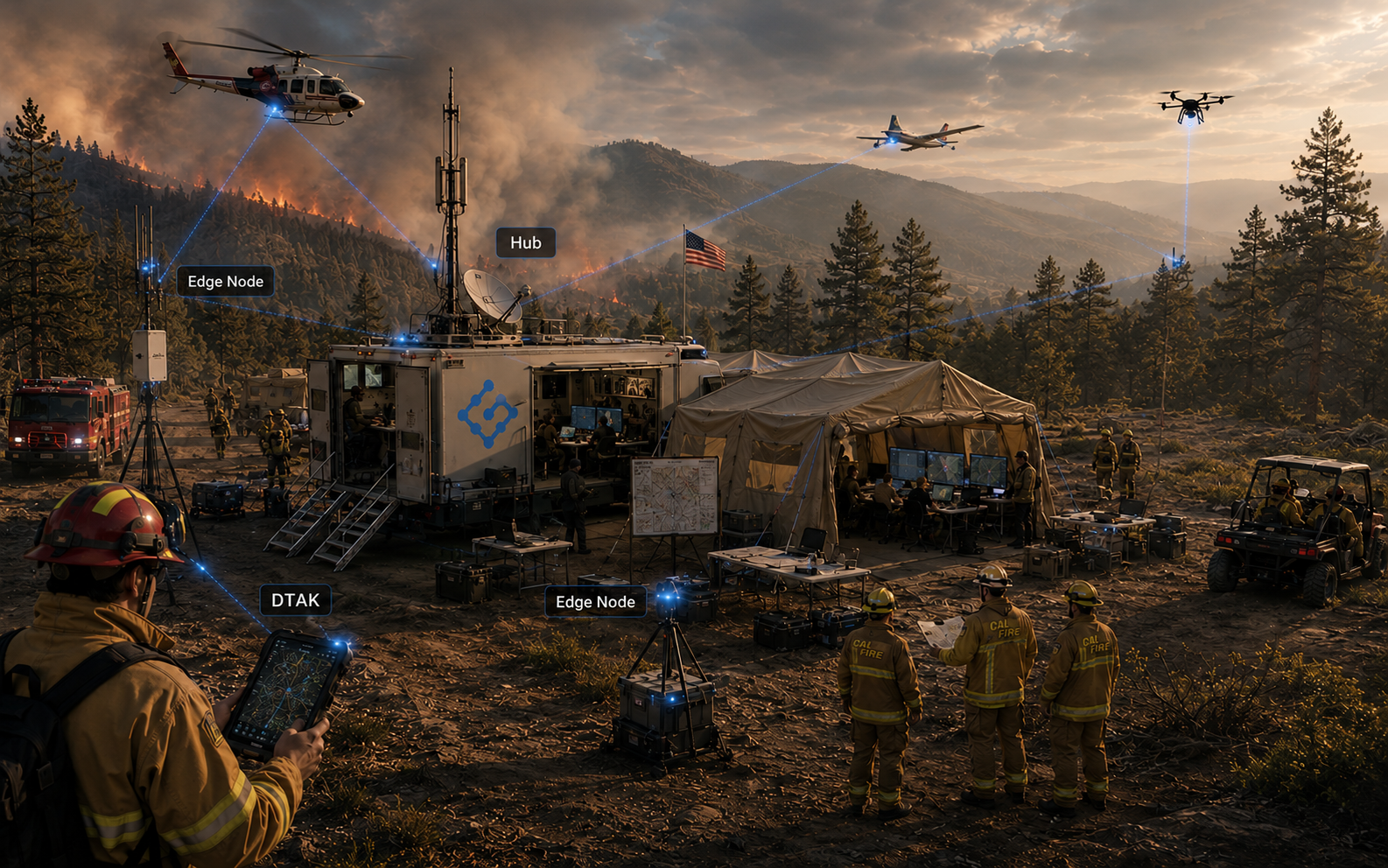
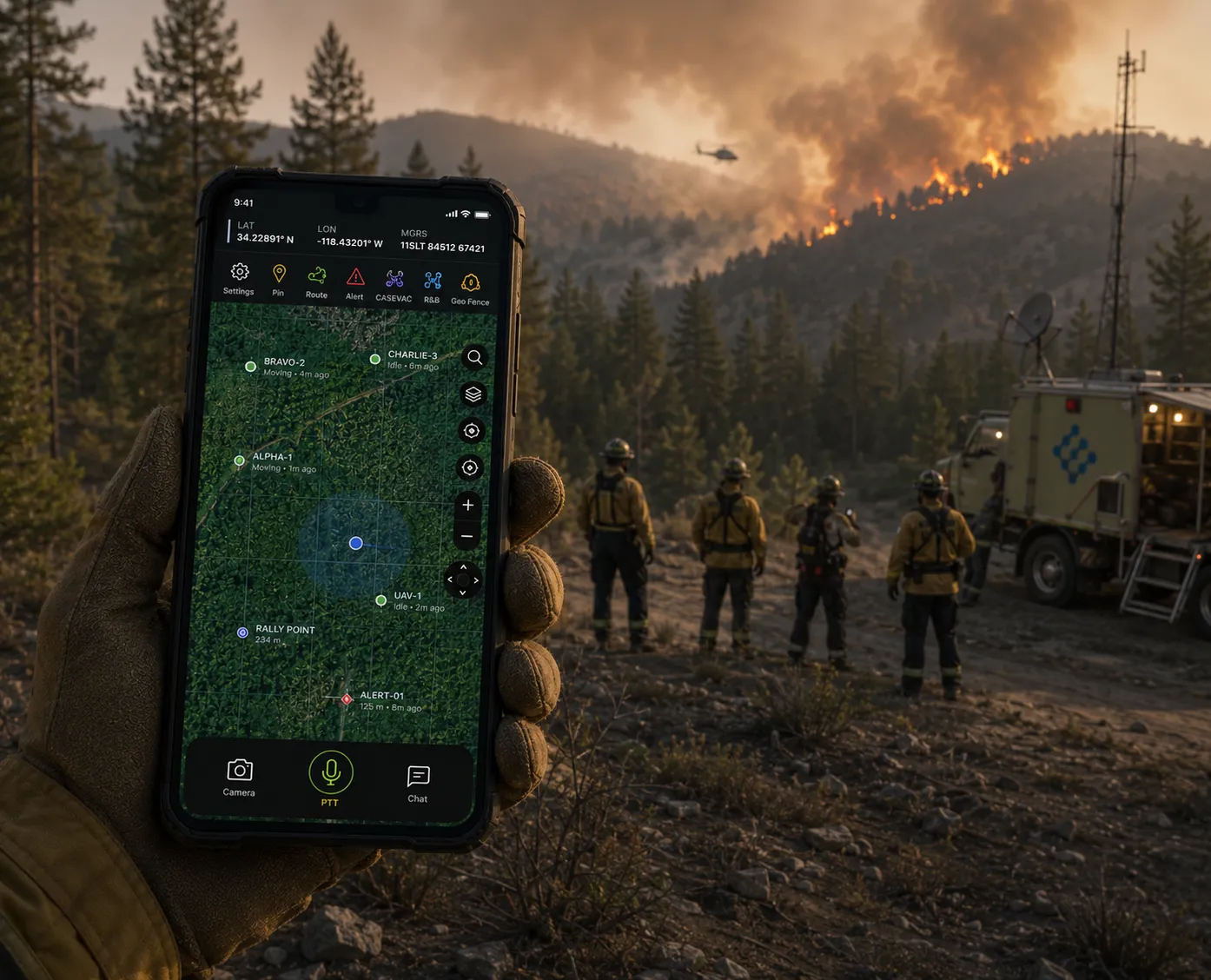
DTAK is the communications layer at the edge of the TrustGrid fabric. It operates securely on contested, congested and degraded networks — functioning fully offline when connectivity fails. Every message is end-to-end encrypted, every session is cryptographically authenticated by the SSI Identity Fabric.
- End-to-end encrypted messaging and voice
- Offline-first operation on PACE-ready networks
- Device and user identity via SSI
- Bridges to Edge and Hub Nodes automatically
Local compute at the tactical boundary.
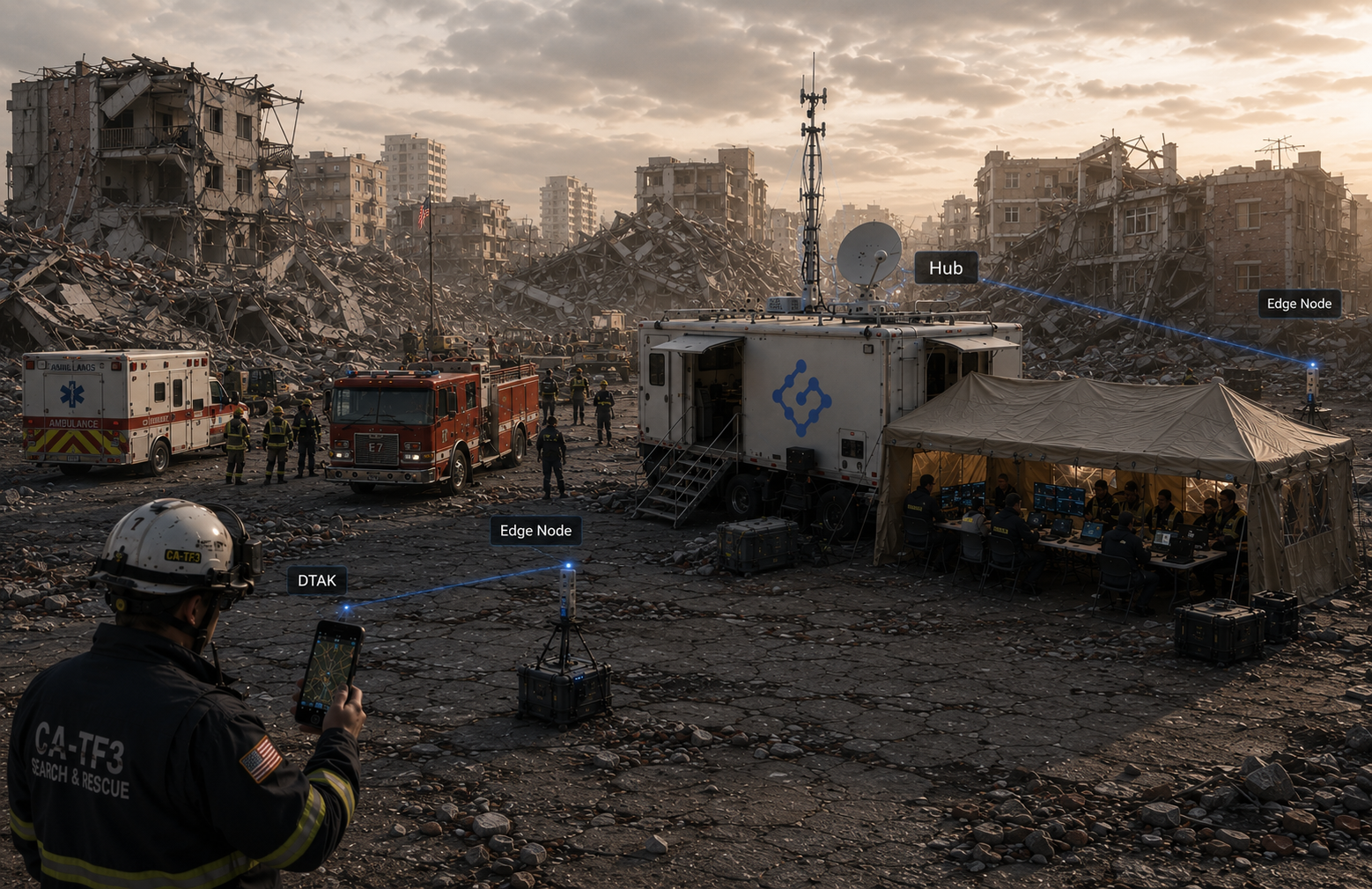
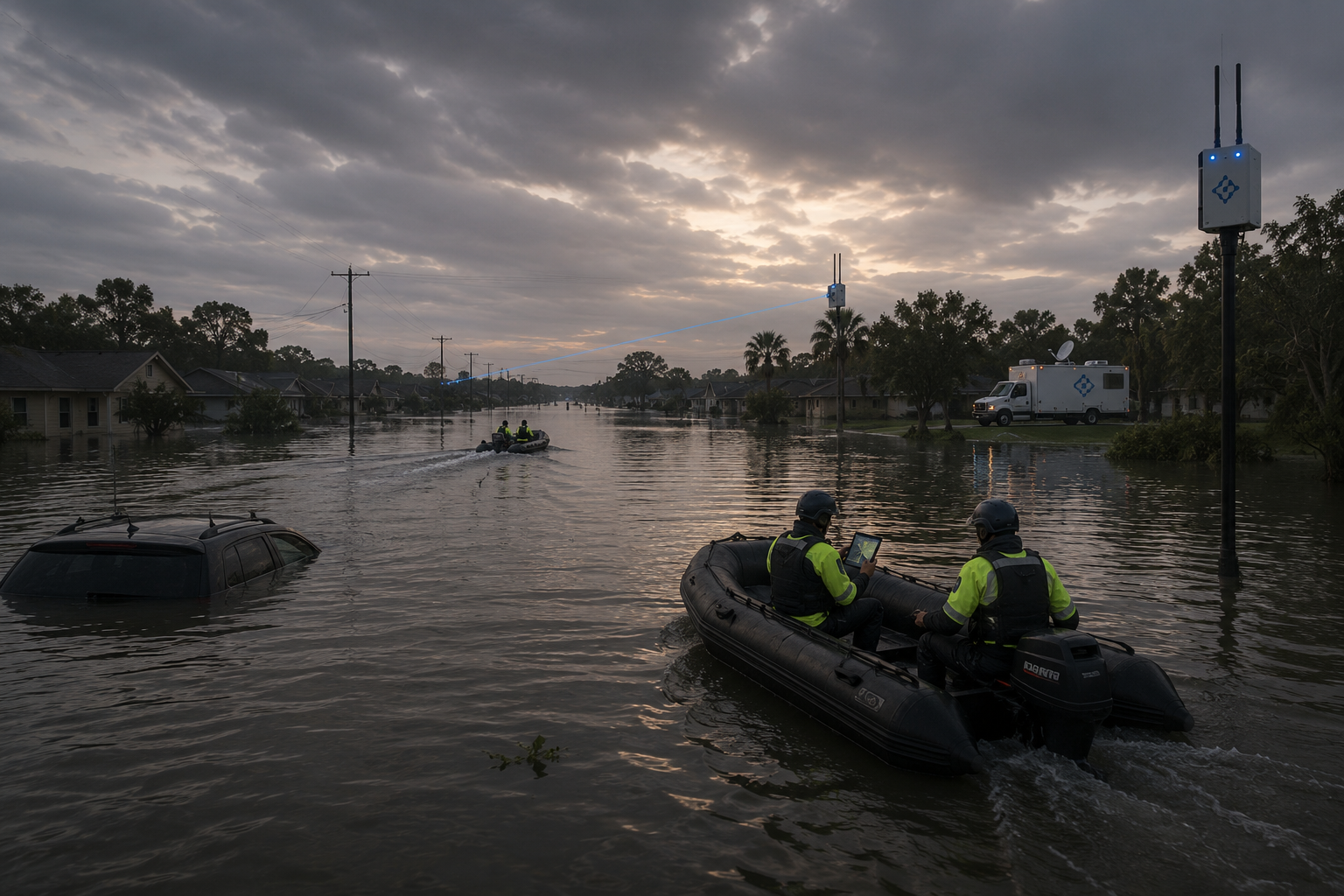
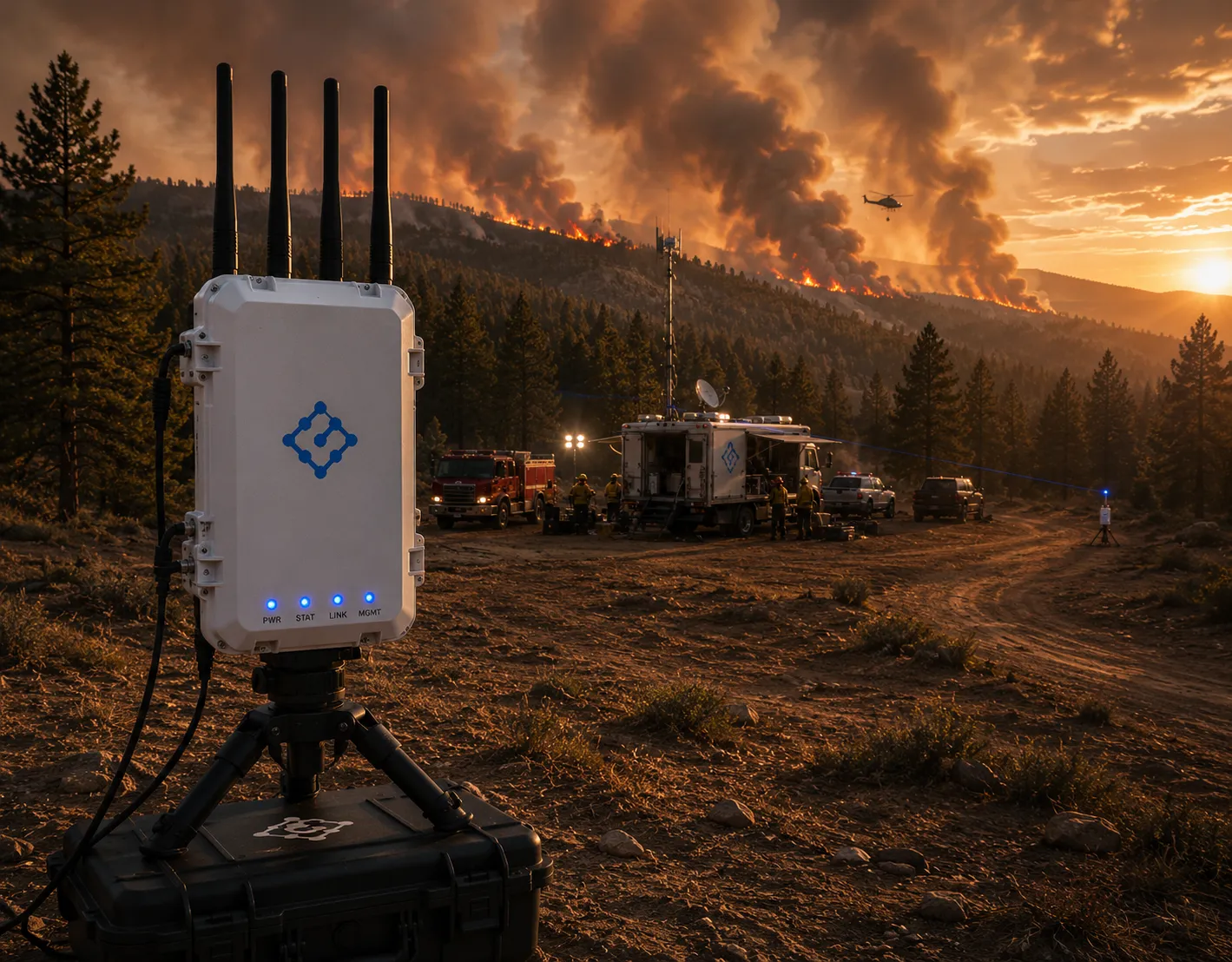
Edge Nodes extend the TrustGrid fabric to the physical edge — providing local compute, storage and routing without cloud dependency. When connectivity drops, the Edge Node keeps operating. When it restores, it synchronises with Hub Nodes automatically.
- On-premise compute for disconnected operations
- Local credential verification via SSI without cloud lookup
- Automatic synchronisation with Hub Nodes on reconnect
- Ruggedised and containerised deployment options
Federation and orchestration at the regional tier.
Hub Nodes aggregate data, identities and operational telemetry from multiple Edge Nodes. They manage cross-domain federation, enable inter-agency data sharing under policy control, and form the regional backbone of the TrustGrid fabric.
- Regional aggregation for multi-edge deployments
- Cross-domain federation with attribute-based access control
- Policy enforcement and audit logging at the federated layer
- Bidirectional sync with DTAK edge and SSI Identity Fabric

Unified operational awareness across the entire fabric.
The TrustGrid Command Centre consolidates information from DTAK operators, Edge Nodes and Hubs into a single operational picture. Every mission update, communication path and field asset is visualised in real time, enabling commanders to coordinate operations with confidence—even across degraded or disconnected environments.
- Single operational picture across all connected assets
- Live mission tracking and decision support
- Unified visibility across land, air and maritime operations
- Resilient coordination despite network degradation

The technologies powering the fabric.
Three purpose-built engines provide the processing, communications and identity capabilities the TrustGrid operating fabric depends on.
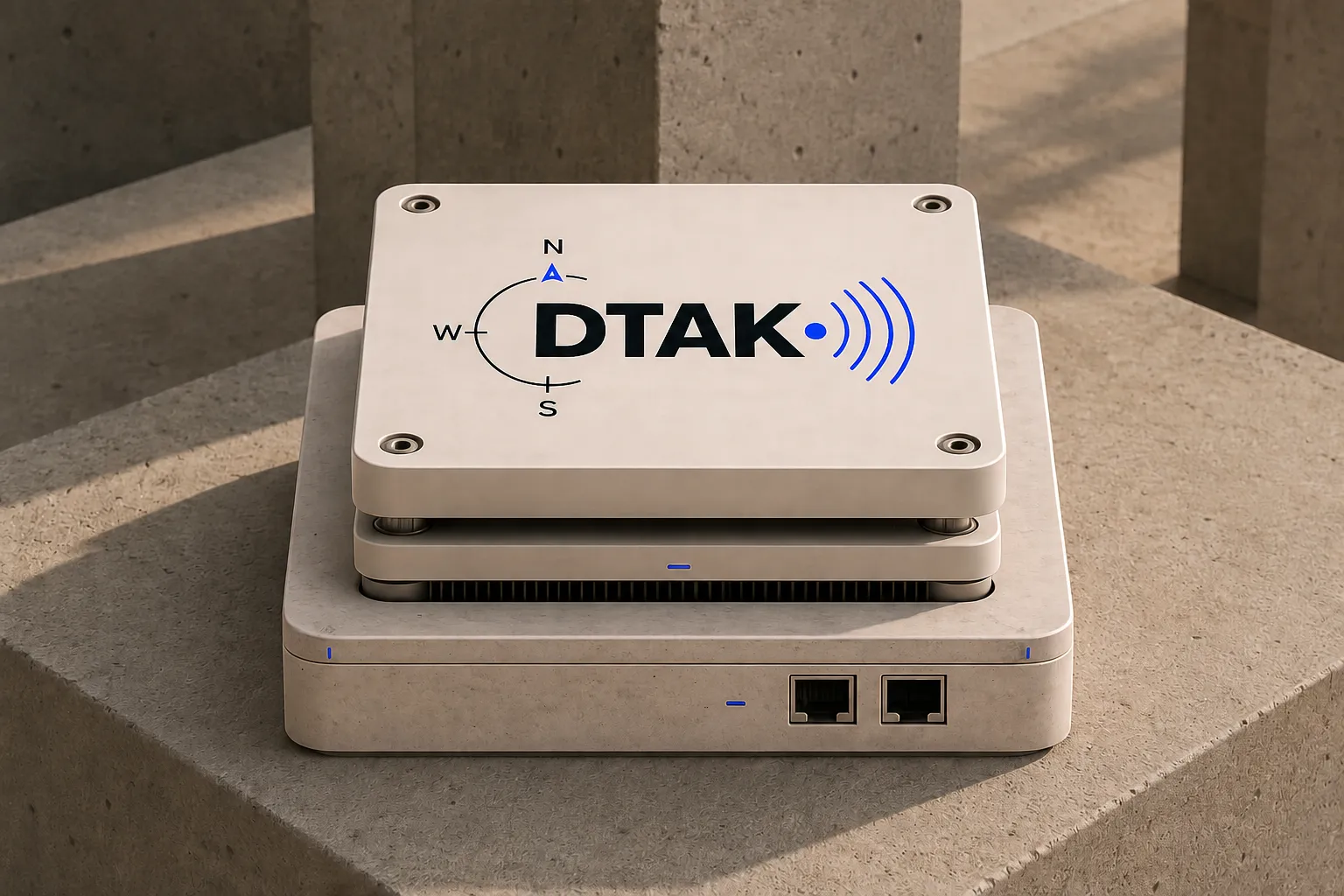
DTAK Core
The operational brain of DTAK. Manages mission planning, routing decisions, real-time coordination and resilient workflow orchestration across the operating fabric.
- Mission orchestration and planning
- Adaptive routing and topology management
- Secure messaging and push-to-talk
- Situational awareness and mapping
- Offline-first operation with sync on reconnect
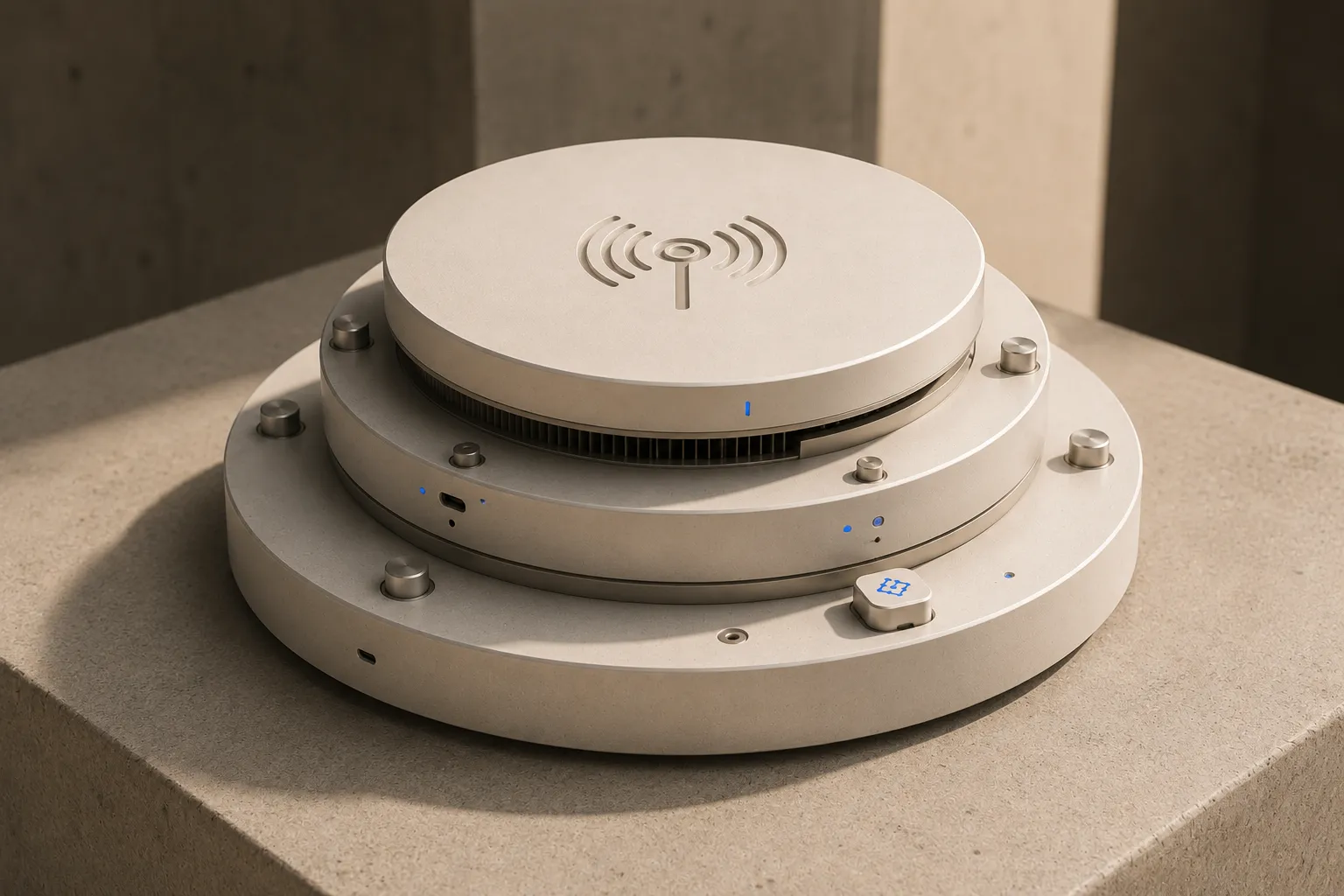
DCOMM Core
Provides resilient multi-path networking across contested and degraded environments. DCOMM Core manages link selection, store-and-forward queuing, mesh formation and intelligent traffic routing.
- Multi-radio and multi-path link management
- Mesh networking and store-and-forward
- Satellite, cellular and wired transport
- Dynamic link quality monitoring
- Gateway and backhaul services

SSI Core
Decentralised identity and trust management for every entity in the TrustGrid fabric. SSI Core handles credential issuance, verification and revocation without depending on a central authority.
- Verifiable credential issuance and verification
- DID management for people, devices and services
- Policy-based access control at every layer
- Offline credential verification without cloud lookup
- Zero-trust identity across all fabric boundaries
The mission continues regardless of what the network does.
PACE — Primary, Alternate, Contingency, Emergency — is not an acronym. It is the architectural guarantee that the TrustGrid fabric maintains operational continuity across every possible network failure scenario.
Primary
Preferred operational path. Continuous discovery and registration of edge nodes and backhaul links with live characterization of SATCOM, LTE/5G and mesh paths against quality, congestion and threat.
Alternate
Activated automatically when the primary path becomes unavailable. Sub-second autonomous fault isolation and restoration across active and hot-standby terrestrial and mesh links — no operator action, no session loss.
Contingency
Maintains mission continuity during significant network degradation. Cold-start SATCOM acquisition and synchronisation within 3–5 minutes; proactive capacity rebalancing on predicted congestion.
Emergency
Final resilient path ensuring critical communications remain available. Intent-preserving degradation when full compliance isn't possible — mission-critical traffic survives on whatever transport remains, down to LoRa.
Build operations that continue
when networks don't.
Speak with the TrustGrid team to explore how resilient communications, trusted identity and adaptive networking can support your operational environment.